How Catholic Church shapes Brazilian social values today
The Catholic Church remains a cornerstone of Brazilian identity, though its grip on the nation's moral compass is shifting as new generations seek different answers.
This analysis explores how traditional religious structures face competition from rising evangelical movements and how these shifts reshape the country's social values.
* The historical dominance of the Catholic Church in Brazil. * The rise of evangelicalism and its impact on social values. * The tension between traditional doctrine and modern secularism.
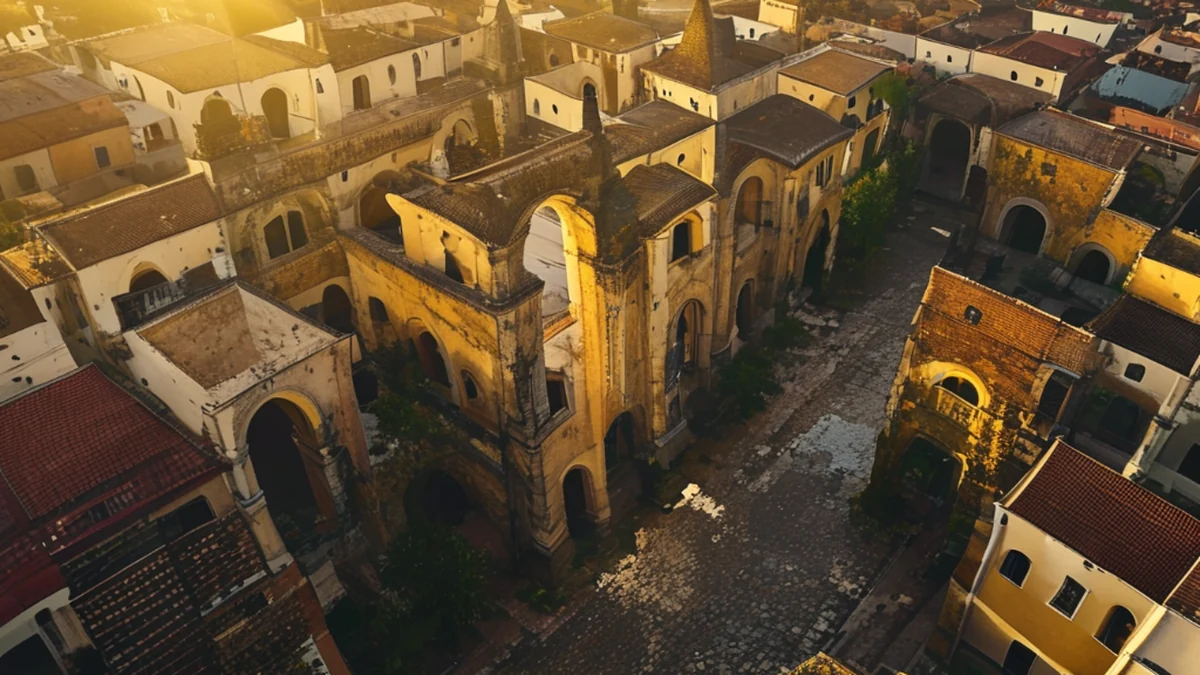
How did the Catholic Church first take root in Brazil? A heavy wooden crucifix hangs in a quiet, sun-drenched chapel in Minas Gerais, where the scent of incense has lingered for generations. According to a 2014 Pew Research Center study, 81% of Brazil's population was raised Catholic.
The Catholic Church has served as the primary architect of Brazilian social structures since the colonial era, shaping everything from education to local governance.
For centuries, the religious identity of the nation was nearly synonymous with a single faith. This historical dominance established the moral framework for families, community gatherings, and even the legal underpinnings of social life.
While the country has become increasingly pluralistic, the cultural echoes of this period still influence how Brazilians view authority, community, and tradition.
The sheer scale of the religious infrastructure—from massive cathedrals to small rural parishes—created a unified social fabric.
This network provided more than just spiritual guidance; it offered a social safety net and a sense of belonging that defined the Brazilian experience for much of the 20th century.

How does the Catholic Church influence Brazilian social values?
A group of elders sits on a stone bench in a town square, debating the merits of a new local law while glancing toward the church steeple. The Catholic Church influences Brazilian social values by acting as a traditionalist anchor in a rapidly changing political and cultural landscape.
According to World Bank data, Brazil recorded a total population of 212,812,405 in 2025.
While the sheer percentage of the population identifying as Catholic has seen a gradual decline, the institution's influence remains heavy in the realms of family values and social justice.
The Church often acts as a mediator between the state and the people, particularly in regions where government presence is minimal. Its teachings on the sanctity of life and the importance of the family unit continue to shape the political discourse of millions.
However, the influence is no longer monolithic. The Church now competes with various movements to define what it means to be a "moral" citizen. This competition often centers on issues such as gender roles, education, and the role of the state in private life.
| Aspect of Influence | Traditional Role | Modern Shift |
|---|---|---|
| Family Structure | Emphasis on patriarchal authority | Focus on individual autonomy |
| Education | Religious-based schooling | Competition with secular/evangelical models |
| Political Power | Direct alliance with the state | Indirect influence through social networks |
| Community Role | Central hub for local identity | Diversification of community centers |
How is evangelicalism changing Brazil's demographics? The sound of a heavy drum beat echoes from a storefront-turned-temple, competing with the distant ringing of church bells. The sudden surge in evangelical populations has fundamentally altered the religious landscape, creating a new power center in Brazilian society.
As the Catholic Church's share of the population changes, evangelical denominations—particularly Pentecostal groups—have filled the void in urban centers. This shift is not just about theology; it is about a different style of community engagement and political mobilization.
The rapid growth of these groups has created a more fragmented religious identity, where different denominations vie for influence over the national agenda.
This demographic shift has led to a more vocal and politically active religious-based constituency. Unlike the more traditional, often more quietist Catholic structures, many evangelical groups emphasize active participation in the political process, often focusing on conservative social policies.

The tension between tradition and secularism
A young professional scrolls through a smartphone in a bustling São Paulo cafe, momentarily ignoring the religious iconography in the window display. The tension between traditional religious values and the growing trend of secularism creates a complex tuggle for the soul of the nation.
As Brazil urbanizes and integrates further into the global economy, the influence of traditional religious institutions faces scrutiny from a more secularized youth. This tension manifests in debates over reproductive rights, LGBTQ+ rights, and the separation of church and state.
The struggle is between a desire to preserve historical identity and the necessity of embracing modern, individualistic values.
This friction often results in a polarized political environment. When religious identity becomes a primary driver of political affiliation, consensus-building becomes increasingly difficult.
The struggle to balance ancient traditions with the realities of a 21st-century society remains one of Brazil's most significant social challenges.
The changing face of religious identity
A traveler walks through a crowded market, noticing how the local artisans mix traditional religious symbols with modern, trendy designs. The changing face of religious identity in Brazil reflects a move toward more personalized and diverse expressions of faith.
The old-fashioned, monolithic identity of being "Catholic" is being replaced by more nuanced affiliations. Many Brazilians now navigate multiple religious worlds, participating in traditional Catholic rituals while also engaging with evangelical or spiritist practices.
This hybridity makes the religious landscape harder to predict and more complex to analyze.
This evolution suggests that while the old structures might be weakening, the role of faith in Brazilian life remains central. The question is no longer whether religion will matter, but which version of faith will define the next century of Brazilian social values.
Practical steps for understanding religious shifts
To analyze the complex intersection of faith and society, one can follow these steps:
- Track demographic shifts in urban vs. rural areas to see how different denominations grow. 2. Monitor political voting patterns to correlate religious affiliation with policy preferences. 3. Observe the role of religious organizations in local community development and social services. 4. Analyze the impact of social media on the spread of religious-based political rhetoric.
The limits of this analysis lie in the fact that religious identity is often private and can be expressed in ways that traditional statistics might miss. Furthermore, the intersection of faith and politics is highly volatile and can change rapidly based on the political climate.
- Observe local community gatherings to see how faith influences daily interactions.
- Engage in respectful dialogue with neighbors to learn about their personal spiritual journeys.
- Visit different places of worship to witness the diversity of modern religious expression.
When I traveled through different regions, I was surprised by how much local customs blended with formal liturgy. I realized that listening more than talking was the best way to grasp the nuances of these shifting identities.
Related





Comments 0