Brazil's 212 Million People Strain Urban Infrastructure Now
"Brazil's sprawling metropolises are at a critical juncture, grappling with rapid urbanization, deepening social divides, and complex infrastructure demands."
Brazil's cities are currently navigating a complex transition where massive population density meets significant environmental and economic pressures. While urban centers drive the nation's economy, they also face systemic challenges regarding sustainability and social equity.
* Scale of Density: A total population of 212,812,405 people places immense strain on urban infrastructure. * Environmental Crisis: Environmental degradation, specifically fires and deforestation, affects 90% of Brazilian municipalities. * Labor Fluctuations: The urban economy is currently navigating an unemployment rate of 6.8%. * Systemic Inequality: Rapid development has created a stark contrast between modern hubs and informal settlements.
What is happening with urbanization in Brazil? The sun beats down on the asphalt of a crowded São Paulo thoroughfare as commuters navigate the morning rush. You feel the vibration of the subway beneath your feet and the heavy humidity of a city that never seems to slow down.
The sheer scale of Brazil's demographic footprint is the primary driver of its urban landscape. According to World Bank data, Brazil's total population was 212,812,405 in 2025.
This massive population is not evenly distributed; instead, it clusters heavily in metropolitan hubs, creating high-density environments that demand constant infrastructural updates.
This concentration leads to intense pressure on housing, public transportation, and sanitation systems. As people migrate toward cities in search of economic opportunity, the demand for services often outpaces the government's ability to provide them.
This creates a cycle where urban growth is both a sign of economic vitality and a source of logistical strain.
The economic drivers fueling this migration are diverse, ranging from the industrial strength of the Southeast to the rising tech sectors in southern hubs.
However, the rapid pace of this growth often results in unplanned urban sprawl, making long-term city planning a monumental task for local authorities. But the physical sprawl is only one part of the struggle; the social landscape is even more divided.
- Identify the primary growth corridors connecting major metropolitan hubs.
- Map the density of informal settlements relative to planned residential zones.
- Evaluate the integration of public transit networks with peripheral neighborhoods.
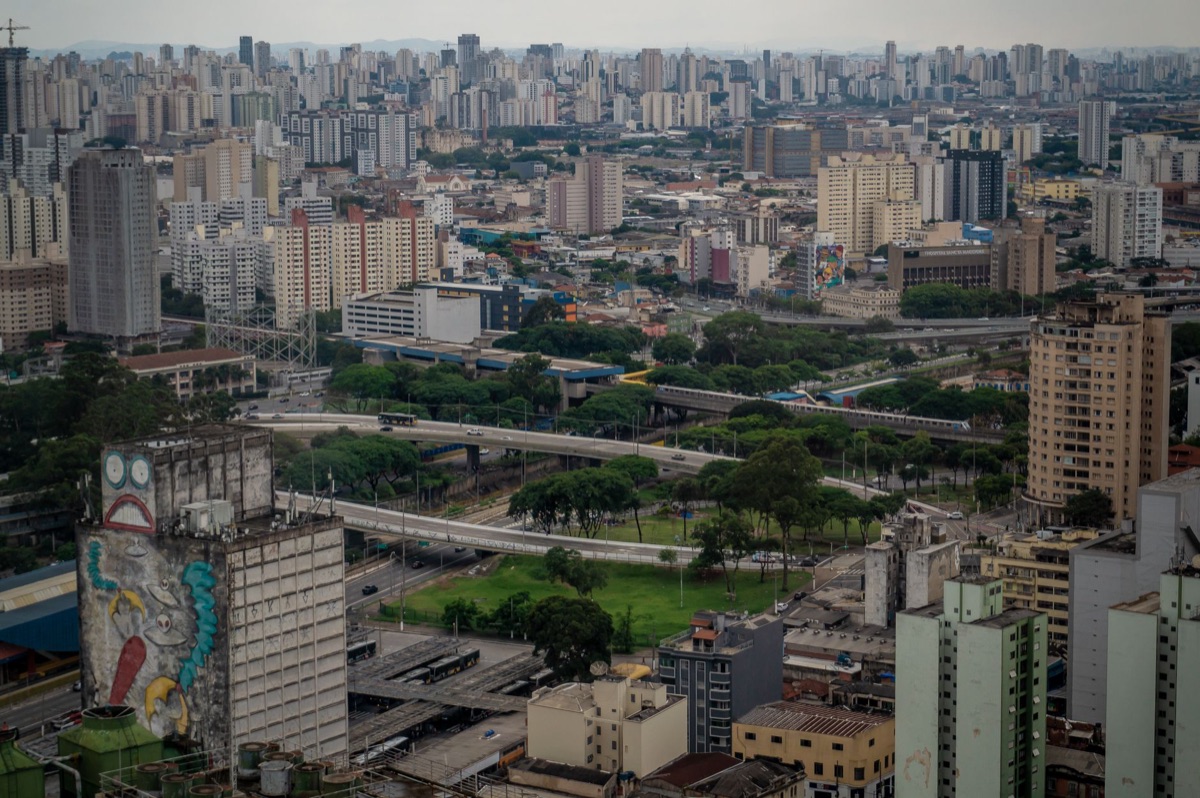
What social problems are Brazilian cities facing? A heavy layer of gray smog hangs over the skyline during the twilight hours, blurring the line between the skyscrapers and the clouds.
You watch from a high-rise window as the lights of distant, informal settlements begin to flicker on, highlighting the physical distance between different social classes.
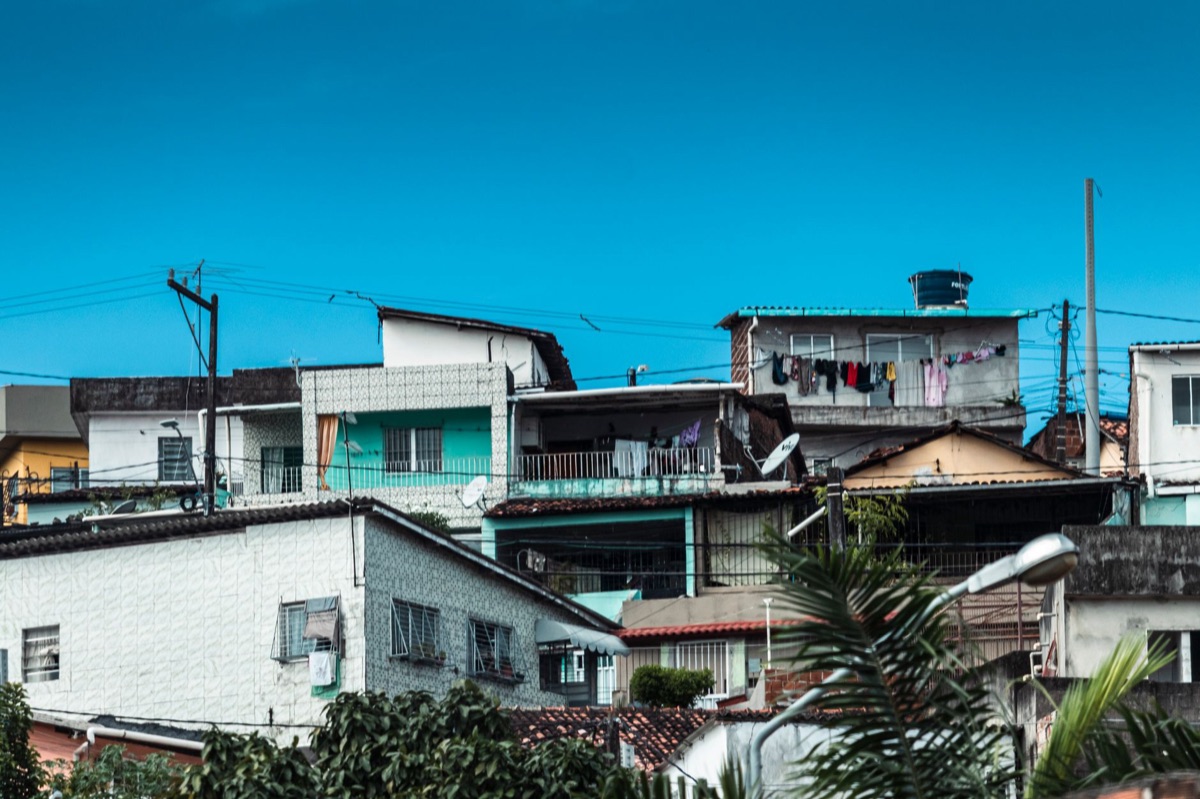
Social inequality in Brazil is often written into the very geography of its cities. The divide between high-end, serviced districts and informal settlements is a defining characteristic of the urban experience.
This spatial segregation limits access to education, healthcare, and stable employment for a significant portion of the population.
Beyond social stratification, environmental degradation has become a central social issue. According to a survey carried out by the Brazilian Institute of Geography and Statistics (IBGE), 90% of Brazilian municipalities have environmental problems.
These issues are not just distant ecological concerns; they directly impact the health and safety of urban residents.
The most frequently reported problems include fires, deforestation, and silting. In urban peripheries, these issues often manifest as poor air quality or the contamination of local water sources, further exacerbating the hardships faced by vulnerable populations.
When I walked through these diverse neighborhoods, I was surprised by how quickly the landscape shifts from high-rise luxury to dense, informal housing. I realized that understanding local community dynamics is more important than just looking at a map.
Yet, as these social and environmental tensions mount, the economic engine of the city is also shifting underfoot.
How is the Urban Economy Responding to Modern Pressures?
The rhythmic tapping of fingers on a laptop keyboard echoes through a brightly lit co-working space in a modern business district. Outside, the street level is a different world, filled with the informal commerce of vendors navigating the sidewalk.
The urban economy is the engine of Brazil, but it is currently navigating a period of labor market adjustment. Economic stability in the cities is closely tied to employment rates, which have seen recent shifts.
According to the International Monetary Fund (IMF), Brazil's unemployment rate was 6.8% in 2026.
While this figure represents the current state of the workforce, it is important to look at the trajectory of the economy. For comparison, World Bank data showed that Brazil's unemployment rate was 6.0% in 2025.
This upward trend suggests that urban centers are facing increasing pressure to generate stable, formal employment amidst global and local economic shifts.
The resilience of the urban economy often depends on the sector. Tech hubs and financial centers show high levels of adaptability, whereas traditional manufacturing and service sectors may be more susceptible to the fluctuations seen in the current unemployment data.
| Economic Indicator | 2025 Figure (World Bank) | 2026 Figure (IMF) |
|---|---|---|
| Unemployment Rate | 6.0% | 6.8% |
| Total Population | 212,812,405 | N/A |
- Assess the stability of local service sectors during economic fluctuations.
- Monitor the growth of digital commerce within informal marketplaces.
- Analyze the availability of micro-credit for small-scale urban entrepreneurs.
While the economy fluctuates, the physical environment of these cities faces even more direct, tangible threats.
What are the Key Environmental and Geographic Risks in Brazilian Cities?
The smell of damp earth and smoke lingers in the air after a heavy rainstorm. You notice how the water struggles to drain from the clogged gutters, swirling around debris and sediment in the rising street level.
Environmental risk is a pervasive threat to the stability of Brazilian urban centers. The scale of the problem is widespread, as evidenced by the fact that 90% of municipalities report environmental issues.
This widespread degradation makes urban planning a high-stakes endeavor involving climate resilience and disaster prevention.
Specific threats such as silting in major waterways pose a direct risk to urban water security. When rivers and drainage systems are compromised by sediment and pollution, the risk of flash flooding increases, particularly in densely populated areas with insufficient drainage infrastructure.
Furthermore, the intersection of deforestation and urban expansion creates a feedback loop of environmental instability. As cities expand, they often encroach on protected areas, which in turn contributes to the very deforestation and fire risks reported by the IBGE.
- Inspect drainage infrastructure in low-lying areas before the rainy season.
- Monitor soil stability on steep hillsides prone to erosion.
- Evaluate the impact of heat islands on densely built-up city centers.
Even amidst these environmental and economic risks, a different kind of energy is emerging in the streets.
How is Brazilian Urban Culture Evolving Amidst These Changes?
A burst of colorful graffiti catches your eye on a concrete wall as you walk through a revitalized arts district. The sound of a distant drum beat mixes with the chatter of a diverse crowd gathered at a local food market.
Despite the systemic challenges, Brazilian urban culture is characterized by incredible dynamism and adaptation. The cities are melting pots where traditional regional customs meet globalized digital trends.
This evolution is visible in everything from the rise of digital nomad hubs to the vibrant street art that reclaims neglected urban spaces.
Urban life is also being reshaped by the "gig economy" and new modes of connectivity. While this brings flexibility, it also ties back to the economic discussions regarding employment stability.
The culture of the city is increasingly defined by this tension between rapid technological advancement and the struggle for social and economic security.
When I visited local community centers, I noticed how street art serves as a powerful tool for reclaiming public space. I would spend more time observing these grassroots cultural expressions to better understand urban identity.
Summary of Urban Challenges
Navigating the complexities of Brazilian cities requires understanding several overlapping layers of development and risk.
- Manage Demographic Pressure: Addressing the needs of a population of 212,812,405.
- Mitigate Environmental Risk: Tackling the issues affecting 90% of municipalities, such as fires and silting.
- Stabilize the Labor Market: Monitoring unemployment trends, which reached 6.8% in 2026.
- Bridge Social Divides: Integrating informal settlements into the broader urban infrastructure.


Comments 0