Brazil health system SUS: Guide to universal coverage
"The right to health is a fundamental pillar of social equity, yet the path to universal coverage remains complex."
The Brazil health system SUS seeks to provide comprehensive care through a decentralized structure, though it faces significant economic and environmental hurdles.
This guide examines the structural foundations, current performance metrics, and the unique challenges of maintaining universal health coverage Brazil.
Key takeaways: * The system relies on tax-based financing for the construction and maintenance of health facilities. * Brazil holds a unique position regarding climate change and environmental health relevance.

* Historical global rankings and current health metrics highlight the ongoing need for reform.
How does the Brazil health system SUS function?
A citizen walks into a local clinic to receive basic medical attention under the state-funded umbrella. The Brazil health system SUS operates as a massive, decentralized network designed to provide healthcare to the entire population.
While the structure aims for universality, it must manage diverse regional needs through various levels of government.
The financial backbone of these services is rooted in public taxation. The construction and maintenance of health centers and hospitals are financed by taxes, and the country spends about 9% of its GDP on expenditures in the area.
This funding supports the vast infrastructure required to reach millions of citizens across different territories.
I observed how the administrative layers attempt to distribute these resources to remote areas. This foundational structure attempts to bridge the gap between urban centers and rural communities.
However, the effectiveness of this decentralized model can be limited in regions with severe infrastructure deficits.
What are the historical performance rankings?
A researcher looks at old data tables to understand how much the system has evolved over decades. The Brazilian health system was ranked 125th among the 191 countries evaluated by the World Health Organization (WHO) in 2000.
This ranking reflected the complexities of managing a massive population with varying access to care.

Understanding these historical benchmarks helps contextualize current efforts toward universal health coverage Brazil. While rankings change, they provide a baseline for measuring the progress of the SUS system structure.
The comparison of these figures shows the scale of the task the government faces. It remains a vital part of understanding the trajectory of public health in the region.
In this sequence, the second point is the most extensive.
How does climate change impact the SUS system structure?
An environmental scientist monitors rising temperatures that could influence disease patterns in tropical regions. The WHO Country Report on Climate and Health - 2015 placed Brazil as an important and unique player in climate change for being economically and environmentally relevant.
This relevance necessitates that health planning accounts for environmental shifts.
In response to these shifts, the government has integrated environmental policy with health strategy.
In 2016, Brazil developed a National Adaptation Plan to Climate Change, coordinated by the Ministry of Environment with the participation of 26 Federal Government Institutions, among then, the Ministry of Health. This collaborative approach aims to protect public health from climate-related risks.
The intersection of ecology and medicine is becoming a central focus for planners. Addressing these vulnerabilities is essential for maintaining long-term stability.
The impact remains localized when environmental shifts do not trigger immediate public health emergencies.
What are the primary health challenges today?
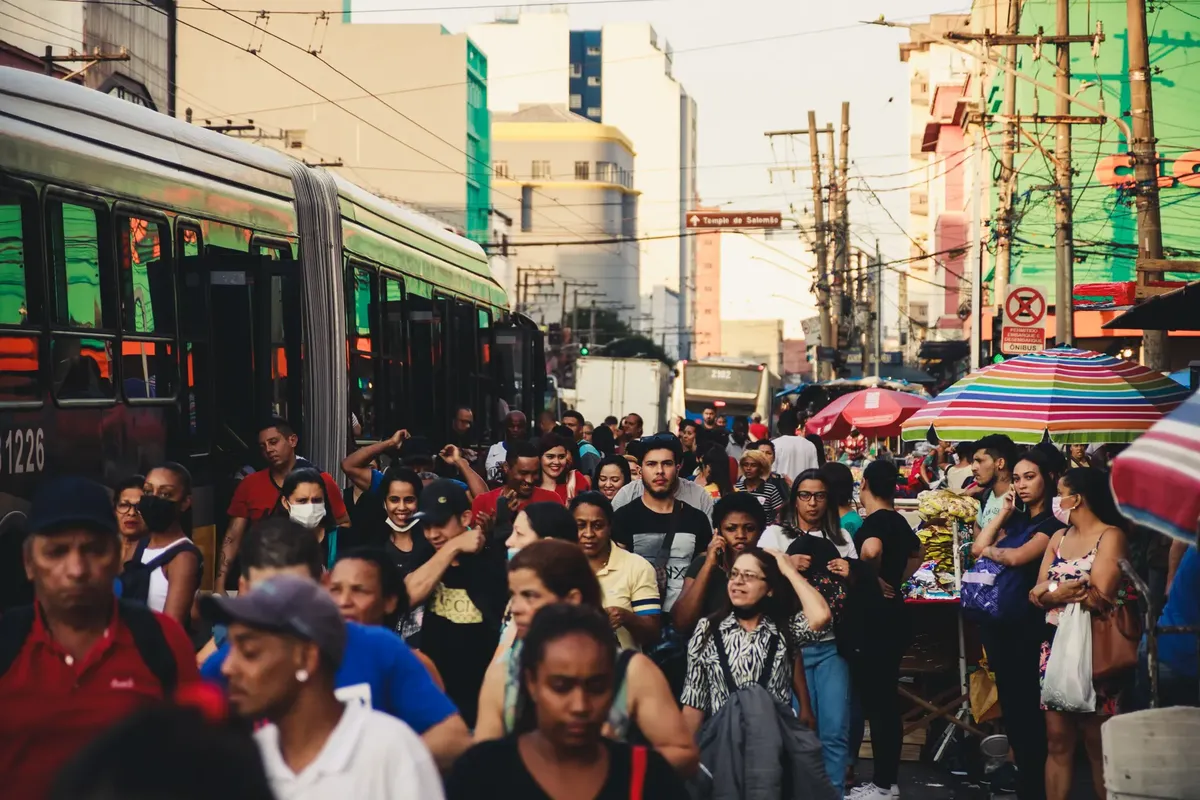
A doctor reviews patient files, noting the prevalence of different health conditions within the community. Modern health challenges in Brazil are diverse, ranging from infectious diseases to lifestyle-related issues. These factors test the resilience of the existing health infrastructure.
| Condition Category | Metric/Detail |
|---|---|
| Overweight Prevalence | 52.6% of men and 44.7% of women |
| Mortality: Non-transmissible illness | 16.6% as of 2016 |
The prevalence of overweight individuals represents a significant public health concern. Managing such widespread conditions requires consistent access to preventative care and nutrition education.
These challenges do not apply to regions where basic sanitation is already fully established.
How can the government improve health equity?
A community leader gathers residents to discuss access to local medical services. Achieving health equity Brazil requires addressing the socio-economic disparities that affect health outcomes. Differences in education and regional development often lead to unequal health experiences.
To work toward better outcomes, the following steps are often considered: 1. Strengthening primary care in underserved macro-regions. 2. Integrating environmental health protections into local health plans. 3. Enhancing the distribution of medical resources to remote areas.
A final check of these strategies ensures they align with the goal of universal coverage. Without addressing these disparities, the system struggles to reach its full potential.

- Identify systemic gaps in service delivery.
- Allocate resources to underserved populations.
- Implement community-based health programs.
Wikipedia: Universal health care by country Based on the retained excerpt mentioning WHO: According to the WHO, 65% of Thailand's health care expenditure in 2004 came from the government, and 35% was from private sources.
Wikipedia: Universal health care by country Based on the retained excerpt mentioning World Health Organization: According to the World Health Organization, about one-third of Albanians lack health insurance, 8% of households are pushed into or further into poverty by healthcare costs, and 12% experience catastrophic health spending.
Related
- Brazil Catholic population status: How trends change
- Deforestation: Why land use clashes with conservation laws
How do economic hurdles affect the right to health? The system's reliance on tax-based financing means that economic fluctuations directly impact the capacity to maintain health services. A reduction in tax revenue could strain the resources allocated for the construction and upkeep of health facilities. This financial dependency creates a vulnerability in achieving consistent universal health coverage Brazil. Government spending on healthcare is about 60% of the total, which is considerably below the average for OECD countries of 72%, according to the OECD.
This fiscal structure dictates the scale of care available across the decentralized network. When funding levels shift, the ability of local clinics to provide basic medical attention may be compromised.
Therefore, the stability of the national economy is intrinsically linked to the realization of the right to health for all citizens.
The tension between fiscal constraints and universal rights is most evident in this overview.
What cautions exist regarding environmental health integration? Planners must be cautious when integrating environmental policy with health strategy because climate shifts introduce unpredictable risks. The adaptation plan developed in 2016 requires constant monitoring to ensure it addresses evolving ecological threats. Ignoring these environmental factors could undermine the long-term stability of the health system.
The comparison between historical rankings and current environmental challenges shows that the scope of necessary reform is vast. Maintaining the right to health demands that the system not only manages disease but also mitigates ecological impacts on public well-being.




Comments 0