Brazil race classification system: How identity shifts guide
"The way we name ourselves reflects the complexity of our history and the nuances of our skin."
Understanding the Brazil race classification system requires looking beyond simple labels to see the fluid nature of self-identification.
This guide explores the five official categories used by the Brazilian Institute of Geography and Statistics (IBGE), examines how identity shifts in binary scenarios, and highlights the tension between ancestry and physical appearance.
Key takeaways include the five census categories, the impact of removing the "pardo" group on demographic percentages, and the distinction between self-reported ancestry and social labels.
How does the IBGE categorize race?
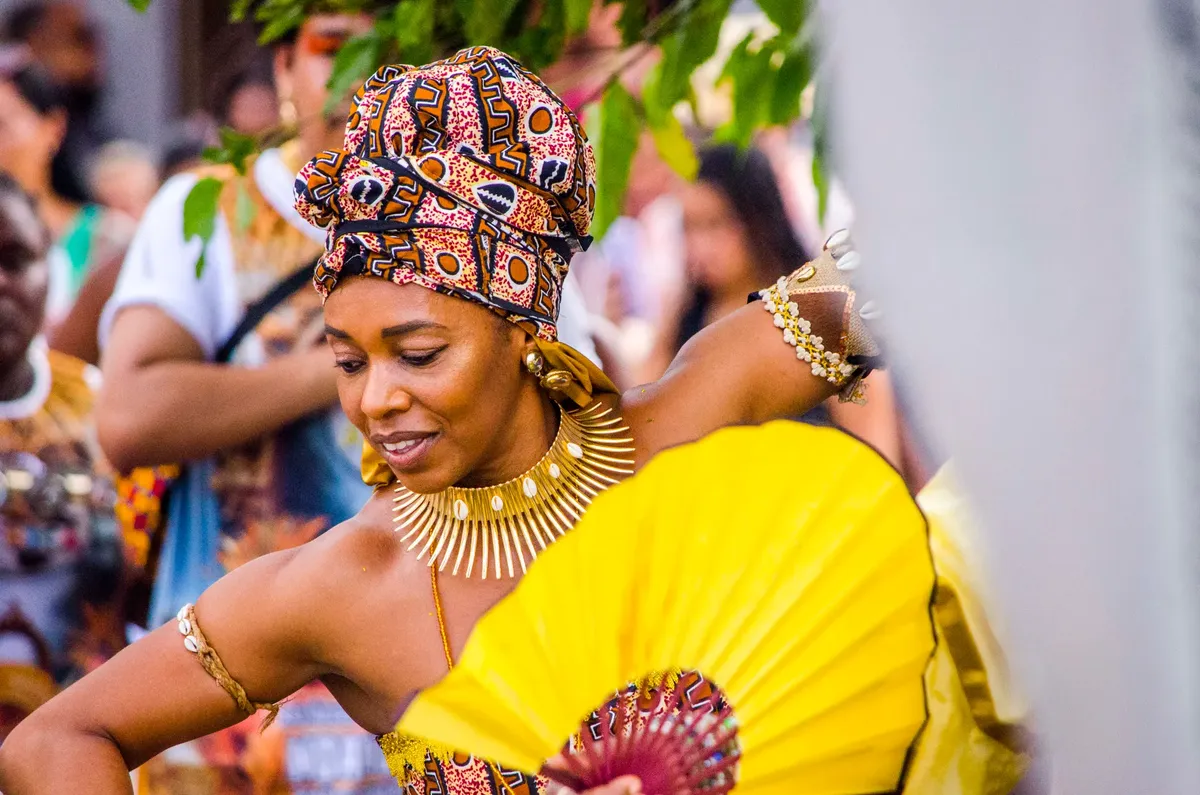
Under the dim light of a lonely office, a clerk sighs while marking the five distinct racial categories used to map the diverse soul of brazil.
A census worker marks a form under the soft glow of a desk lamp, selecting one of five specific descriptors. According to KOSIS, verified official statistics such as those from KOSIS provide data on population, general society, and crime/safety.
Currently, the Brazilian Institute of Geography and Statistics (IBGE) uses five race or color categories in the census: branca (white), parda (brown/mixed), preta (black), amarela (yellow, ethnic East Asian) and indígena (indigenous).
These labels serve as the foundational framework for national demographic data.
The Brazilian race classification system relies on these distinct categories to organize a highly diverse population. While the categories provide structure, they often capture the complexity of social identity in a changing landscape.
The categories used by the Brazilian Institute of Geography and Statistics (IBGE) are: * Branca (white) * Parda (brown/mixed) * Preta (black) * Amarela (yellow, ethnic East Asian) * Indígena (indigenous)
In the 2022 census, 20.7 million Brazilians (10.2% of the population) identified as preto, while 92.1 million (45.3% of the population) identified as pardo, together making up 55.5% of Brazil's population. This shows how the pardo and preto groups form a significant majority.
What happens if the brown category is removed? Brazil race classification system
A researcher sits in a quiet office, looking at a spreadsheet where the "pardo" column is deleted to see the resulting shift.
A survey conducted in the early 2000s with a sample of 2,364 people from 102 municipalities showed that if the "brown" category were removed and Brazilians had to choose between "black" or "white", the population would appear 68% white and 32% black.
This experiment illustrates how much the pardo category influences the national profile.
The Brazilian racial identity is often shaped by these shifting boundaries. Removing the intermediate category changes the visual representation of the country entirely.
| Scenario | White Percentage | Black Percentage |
|---|---|---|
| With pardo category | N/A | N/A |
| Without pardo category | 68% | 32% |
In this binary format, 44% of those identifying as brown would choose the white category. This shows the potential for identity shifts when the spectrum is narrowed.
How do people view their own ancestry?
A person looks at an old family photograph, tracing the lines of a face that tells a story of migration. 86% of the self-reported pardo and 38% of the self-reported white population reported to have African ancestors. This highlights a disconnect between social categorization and biological lineage.
The Afro Brazilian concept of identity often intersects with these reported ancestral roots. While many identify as pardo, their heritage remains deeply tied to African history.
* 86% of pardo individuals reported African ancestors. * 38% of white individuals reported African ancestors. * 14% of the pardos from Rio de Janeiro said they have no African ancestors.
I observed how these percentages change depending on which group is being surveyed. The Brazilian racial identity is not a static fact but a lived experience.
Why does physical appearance matter so much?
A person chooses a label based on the way they look in a mirror, rather than a family tree.
The Brazilian emphasis on physical appearance rather than ancestry is evident from a large survey in which less than 10% of Brazilian black individuals cited Africa as one of their origins when allowed to provide multiple responses.
This suggests that social perception often outweighs historical lineage.
The Afro Brazilian experience is frequently defined by these visual cues. Because the system is based on appearance, social labels can change based on the environment.
The Brazilian race classification system is heavily influenced by: 1. Visual traits and skin tone. 2. Socially accepted terminology. 3. The immediate community context.
A final check of the data reveals that labels are often more about how one is seen than where one's ancestors came from.
How did historical surveys shape these views?
A historian reviews archives, comparing the 1970s to the 1990s to find patterns in identity. Two IBGE surveys, the 1976 National Household Sample Survey (PNAD) and the July 1998 Monthly Employment Survey (PME), have been analyzed to assess how Brazilians think of themselves in racial terms.
This analysis helps track the evolution of social identity over decades.
The study of these surveys helps clarify the Brazilian racial identity. Even as the categories remain somewhat stable, the way people use them changes.
The historical analysis shows: * The 1976 PNAD and 1998 PME provide a longitudinal view of self-identification. * Researchers use these to see how racial thought has evolved. * The data helps distinguish between historical labels and modern perceptions.
Understanding the Brazilian race classification system requires acknowledging that these categories are tools for measurement that do not always capture the full depth of human identity.
The subject here is Brazil race classification system.
The same subject is also called IBGE race categories.
The same subject is also called Race in Brazil society.
This part also covers Understanding IBGE data.
This part also covers Social identity in Brazil.
Understanding IBGE data
Related
- Brazil health system SUS: Guide to universal coverage
- Brazil Catholic population status: How trends change
How does self-identification relate to ancestry? 1. The self-reported data demonstrates that the way people name themselves reflects the complexity of our history and the nuances of our skin. 2. For instance, a significant portion of the pardo group reported African ancestors, even while identifying with the intermediate category. 3. This contrast suggests that social labeling does not perfectly align with deep ancestral roots.
What are the limitations of the census categories? 1. The census categories, while providing a structure for national data, struggle to capture the fluidity of self-identification. 2. The system emphasizes visual traits and social acceptance, which can cause identity to shift depending on the immediate community context. 3. Researchers must remember that these measurement tools do not encapsulate the full depth of human identity.
Understanding the Brazilian race classification system requires recognizing that the labels are tools for description, not absolute definitions of who we are.






Comments 0