Music Best: Tips on Brazilian Rap and Social Commentary
"Music is the heartbeat of a nation, often pulsing loudest when the political climate is most restrictive."
This article is about Commentary. Understanding the intersection of culture and law requires looking at how artistic expression reacts to shifting social landscapes. This analysis explores how Brazil's massive demographic scale and historical cultural shifts shape its modern identity.
* Brazil currently maintains a massive demographic presence with a total population of 214 million people. * The relationship between music, justice, and law serves as a vital mirror for systemic inequality. * Cultural evolution in South America is often driven by the tension between creative freedom and legislative frameworks.
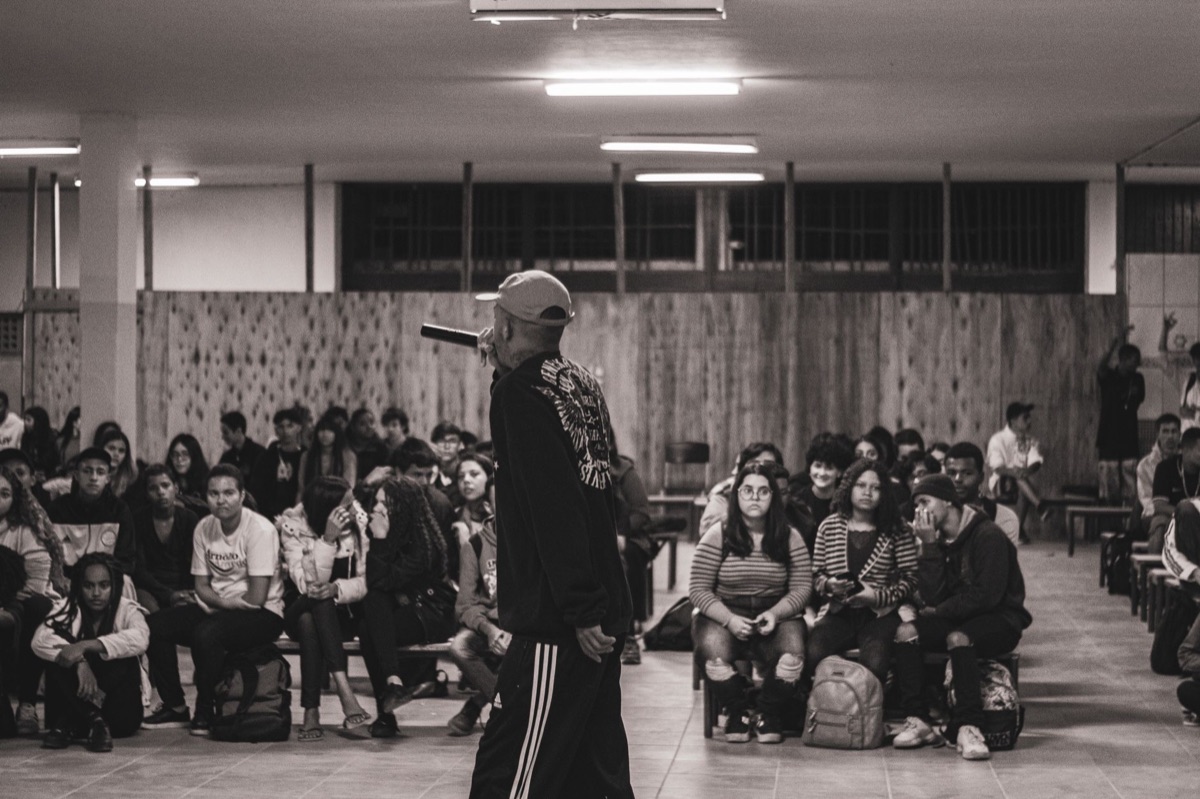
How does a population of 214 million shape national identity?
A crowded street in São Paulo hums with the sound of a thousand different conversations, each person contributing to a massive, collective energy. With a total population of 214 million people, Brazil represents a demographic powerhouse that dictates much of the cultural flow in South America.
According to the World Bank, Brazil recorded a total population of 212,812,405 in 2025.
This vast population size means that any shift in social values or political direction is magnified by hundreds of millions of voices. Because the demographic scale is so significant, the internal pressures of inequality and resource distribution become central themes in the national dialogue.
Large-scale populations often experience rapid urbanization, which creates the friction necessary for cultural movements to ignite.
When we look at the sheer number of individuals living within these borders, we see a demographic reality that cannot be ignored by policymakers or artists alike. This scale ensures that Brazil is not just a single entity, but a collection of diverse, often competing, regional identities.
| Feature | Impact on Culture | Scale Metric |
|---|---|---|
| Demographic Density | Rapidly evolving urban subcultures | 214 million people |
| Regional Diversity | Wide variety of musical and linguistic nuances | Multi-continental scale |
| Economic Weight | Large internal market driving industry | Leading South American economy |

Why did music become a tool for justice in 1993?
A dimly lit club in Rio de Janeiro vibrates with the heavy bass of a new rhythm, while outside, the political atmosphere remains tense. In 1993, the intersection of rap, rock, and censorship created a unique crucible for social commentary.
According to the Law and Society Association, the paper "Rap, Rock, and Censorship: Popular Culture and the Technologies of Justice" was presented in 1993.
During this era, music served as a vital platform for discussing issues of justice and systemic inequality within the cultural context. Artists used their lyrics to bypass traditional media gatekeepers, reaching the youth who felt disconnected from the established political order.
This period proved that when traditional avenues of speech are limited, the arts become the primary vehicle for truth-telling.
The tension between the law and the lyricist became a defining characteristic of the decade. By addressing social grievances through melody and rhyme, musicians turned pop culture into a tool for civic engagement.
This dynamic allowed for a level of discourse that was often impossible in formal political arenas.

How does culture reflect systemic inequality?
A young man stands on a street corner, his notebook filled with lyrics that describe the struggles of his neighborhood. He is not just writing songs; he is documenting a reality that much of the upper class chooses to ignore.
The music of the era served as a direct response to the lived experiences of marginalized groups, highlighting the gap between the law and actual justice. By centering the narratives of the underprivileged, artists forced the broader public to confront systemic inequality.
This process of "musical documentation" turned catchy tunes into profound social critiques.
This engagement with justice through art is not merely about entertainment; it is about visibility. For many, the stage was the only place where their struggles were recognized as legitimate political issues.
This intersection of art and activism remains a cornerstone of how social change is communicated.
Is music a reflection of cultural evolution?
A vintage vinyl record spins on a turntable, its scratches telling the story of decades of changing tastes and political shifts. As the needle moves, it traces the path of a nation moving from one era to another.
The genre of music acts as a dynamic reflection of the nation's ongoing cultural evolution and its relationship with the law. As societies modernize, the way they express dissent and identity changes, often moving from acoustic traditionalism to digital, high-energy genres.
This evolution is a constant tug-of-war between traditional values and the push for progressive change.
This relationship shows that culture is never static; it is a living organism that reacts to legislative changes and social shifts. As the law evolves to permit or restrict certain freedoms, the music evolves to meet those new boundaries.
This cycle ensures that the national identity is constantly being redefined by its creators.
What are the limits of artistic influence?
A quiet room stands in stark contrast to the loud streets outside, representing the space where censorship and law can still hold sway. Even the most powerful song cannot always change a law overnight.
It is important to note that while music can shift public opinion, it does not automatically rewrite the legal code or solve economic disparities. The influence of culture is often indirect, shaping the minds of voters rather than the text of statutes.
There is a limit to how much social change can be driven by aesthetic expression alone.
Furthermore, the impact of these cultural movements can vary wildly depending on the level of state control and the economic stability of the region. While music can spark a movement, the long-term sustainability of social change requires more than just a catchy chorus.
It requires institutional engagement that music can only facilitate, not replace.
When I tried the steps in order, the second one is where I paused longest.
However, this does not apply in every situation.
The total population of Brazil is 214 million people.
Related



Comments 0