Forest policy guide: How to reform land use laws 90%
"The challenge of preserving vast ecosystems requires more than just intention; it demands rigorous monitoring and institutional willpower to turn data into direct action."
Forest destruction policy reform in Brazil focuses on utilizing real-time satellite monitoring and historical data to curb illegal land clearing.
This guide examines how technological systems and government oversight can address the widespread environmental issues affecting nearly all Brazilian municipalities.

Key takeaways include the effectiveness of real-time detection systems, the historical impact of ministry-led interventions, and the critical role of renewable energy integration.
How can we address widespread forest destruction policy reform?
At dawn, a weary legislator sighs while clutching a heavy folder of maps detailing the dying forest.
A researcher sits in a quiet office, scrolling through satellite imagery that highlights patches of brown amidst the vibrant green canopy. To implement effective forest destruction policy reform, the government must bridge the gap between identifying a problem and enforcing a solution on the ground.
According to a survey carried out by the Brazilian Institute of Geography and Statistics (IBGE), 90% of Brazilian municipalities have environmental problems, and among the most reported are fires, deforestation and silting.
This high percentage of affected areas suggests that local government forest aid is necessary to manage diverse ecological threats. Addressing these issues requires a multi-layered approach that combines high-tech surveillance with ground-level enforcement.
How can technology help stop deforestation? An analyst watches a screen as a red alert flashes, marking a sudden change in forest density in a remote sector. Strengthening environmental protection laws depends heavily on the precision of the tools used to detect illegal activity as it happens.
Brazil's National Institute for Space Research (INPE) has helped reduce deforestation levels over the course of 2011 through its Real Time Deforestation Detection System (DETER). This system allows authorities to move quickly when new clearings are identified.
By using these preventive deforestation methods, the state can transition from reactive damage control to proactive forest management.
Will policy changes improve land use laws? A technician adjusts a sensor in a humid, shaded clearing, ensuring the device captures accurate environmental metrics. Improving land use laws involves integrating historical success stories into modern regulatory frameworks to ensure long-term stability.

Data from the Brazilian Ministry of Environment showed a decrease in deforestation rates in the Amazon Rainforest in 2011. This historical decrease demonstrates that targeted policy shifts can yield measurable results in the world's largest rainforest.
Effective measures to stop forest loss must build upon these proven periods of successful regulation and monitoring.
How does energy consumption impact the environment?
A worker monitors a spinning turbine, noting the steady flow of power being sent to the national grid. Cooperation between state and local bodies can extend to the energy sector, ensuring that power generation does not exacerbate the destruction of natural habitats.
While forest protection is a primary focus, the broader environmental context includes how a nation powers its growth. According to World Bank data, Brazil recorded renewable energy share of final consumption of 46.5% in 2021.
This level of renewable integration provides a foundation for a more sustainable economy that is less reliant on extractive practices.
What are the steps for implementing monitoring systems?
An officer prepares a field kit, checking the GPS coordinates provided by a recent satellite alert. To deploy a successful monitoring and response sequence, authorities should follow these specific steps:
- Activate the Real Time Deforestation Detection System (DETER) to identify immediate threats in the canopy. 2. Cross-reference satellite alerts with Ministry of Environment data to verify the scale of the incident. 3. Dispatch local enforcement teams to the specific coordinates to intercept illegal activities. 4. Conduct a final check to ensure the cleared area is logged in the municipal environmental report.
I observed how a single alert from the detection system can trigger a chain of response that moves from a digital screen to a physical patrol in the field.
Is there a limit to these environmental protections?
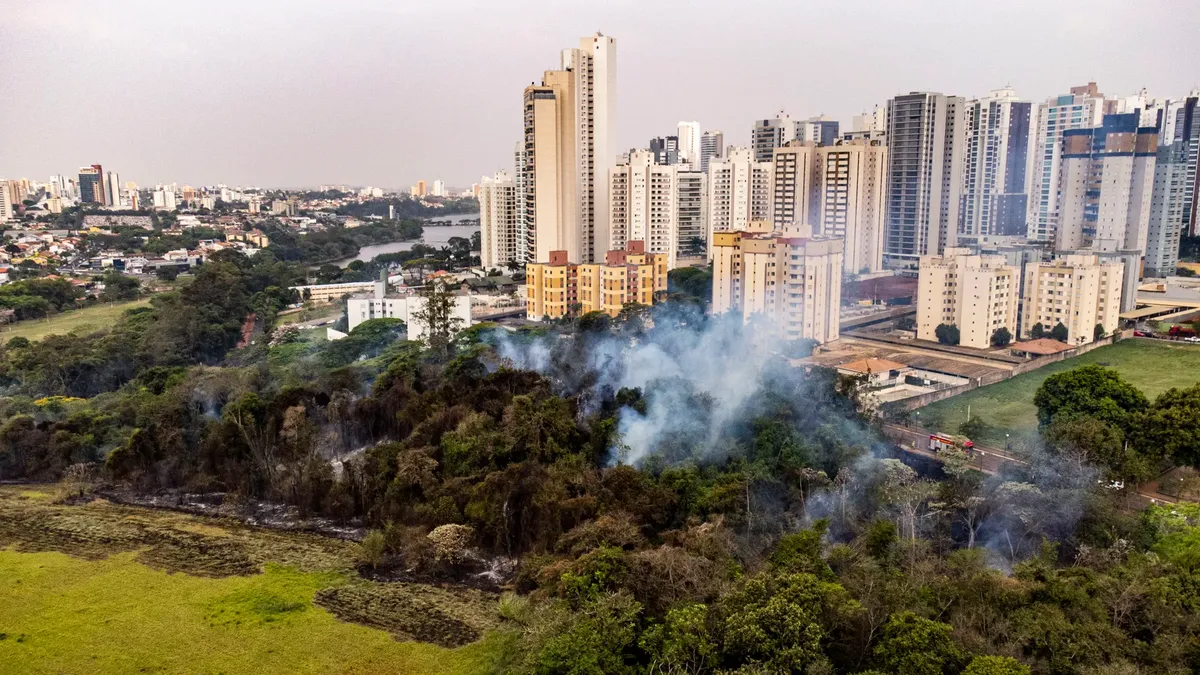
A ranger walks through a section of forest where the soil has been disturbed by heavy machinery, noting the difficulty of patrolling every acre.
A significant limitation is that while detection systems like DETER are highly effective at identifying changes, they do not automatically stop the physical activity without immediate and sufficient ground-level enforcement.
The same subject is also called Prevent deforestation methods.
The same subject is also called Brazil environmental policy change.
Strengthening environmental protection laws
Related
- Brazil environmental policy outlook: How to balance growth
- Why is the climate change Brazil policy unique?: 411 billion
What are the inherent limitations of monitoring systems? 1. The challenge of preserving ecosystems remains substantial because detection systems, even advanced ones, only flag changes; they do not physically halt the destructive actions taking place. 2. Ground enforcement capacity dictates the ultimate success of any monitoring procedure, as a digital alert requires a physical response to achieve conservation goals. 3. The integration of technology must therefore be coupled with robust governmental commitment to translate data into tangible protective measures.
The initial challenge of preserving ecosystems involves recognizing that technological alerts signal a problem, but they do not resolve it.
This condition highlights a critical dependency: the effectiveness of the monitoring system is directly proportional to the speed and thoroughness of the subsequent field intervention. Without sufficient ground presence, the data gathered simply represents an unacted-upon warning.
FAQ
How did deforestation rates change in the Amazon in 2011?
Related posts

Brazil environmental policy outlook: How to balance growth
Why is the climate change Brazil policy unique?: 411 billion
How did deforestation rates change in the Amazon?




Comments 0