Amazon deforestation policy guide: How to see forest loss
"The statistics reflect the ongoing environmental issues Brazil is dealing with."
Amazon deforestation policy faces significant hurdles due to the competing interests of agricultural expansion and forest preservation. This guide examines the fluctuating rates of forest loss, the impact of cattle and soy industries, and the efficacy of recent policing efforts.
You will learn about the historical drivers of clearing, the recent downward trends in deforestation, and the limitations of current protections in frontier states. 1. Deforestation rates have fluctuated wildly, seeing massive spikes in 2020 before recent declines. 2. Cattle ranching and soybean production remain the primary drivers of land conversion. 3. Recent policing has helped reduce annual loss, though demand for exports persists.
How does Amazon deforestation policy change over time?
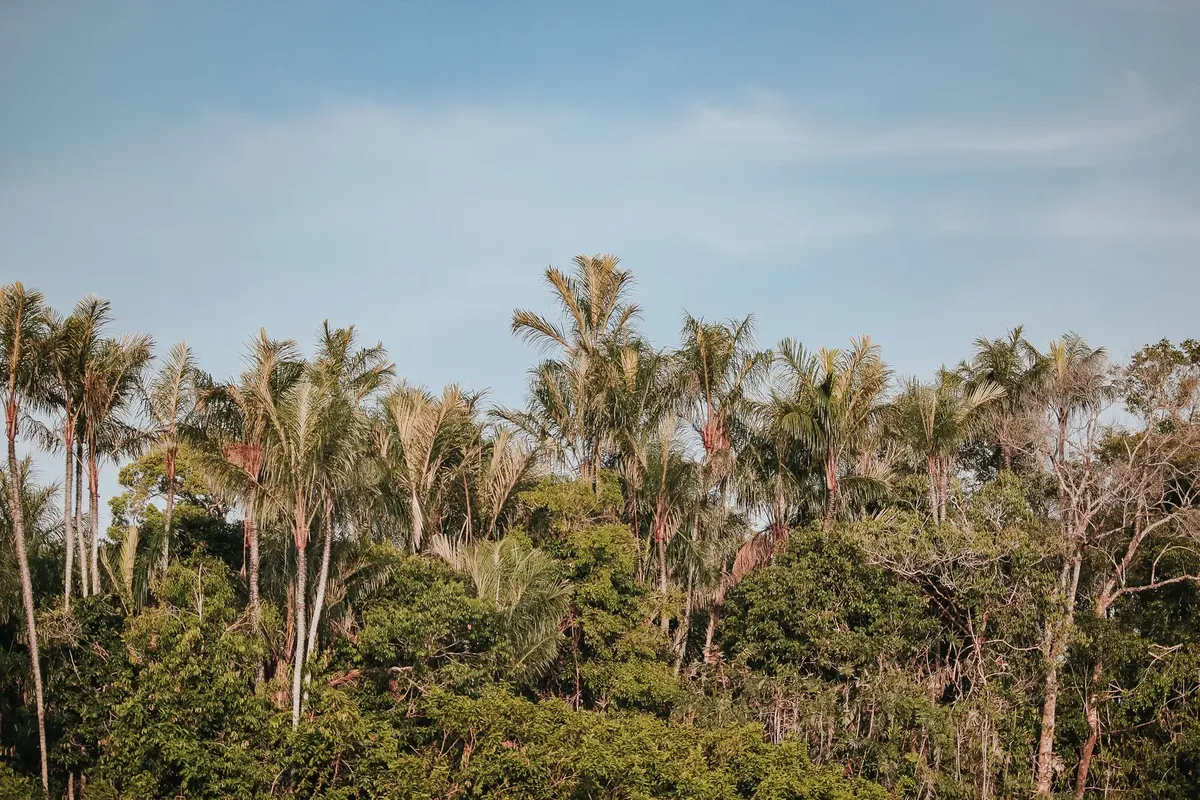
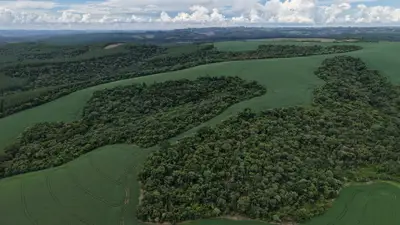
A researcher sits in a quiet office, scrolling through decades of satellite imagery showing the green canopy shrinking into brown patches.
The history of the Amazon shows that forest loss was limited before the 1970s, with cumulative losses totaling approximately 98,000 km² by 1970 from localized logging and small-scale agriculture.
The landscape transformed as the decades progressed. Through the 1980s and 1990s, deforestation intensified, averaging 15,000–20,000 km² annually by the late 1990s. This was fueled by subsidized credit for cattle ranching and soybean cultivation.
By the early 2000s, rates peaked at around 28,000 km² per year, reflecting the cumulative effects of road networks like BR-163 and weak enforcement.
Policy shifts have led to both progress and regression. According to data from the Brazilian Ministry of Environment, a decrease in deforestation rates in the Amazon Rainforest occurred in 2011.
However, rates rebounded in the mid-2010s, reaching 10,129 km² in 2019 due to reduced oversight and renewed agricultural incentives.
Why did forest loss spike so sharply in 2020?
At midnight, a weary technician stares at a glowing screen, feeling the heat of the monitor as red flames bloom across the Amazon map.
A technician monitors a glowing screen, watching red heat signatures bloom across a digital map of the rainforest. In early 2020, the scale of destruction became apparent through sudden, massive increases in cleared land and active fires.

According to Brazil's National Institute for Space Research (INPE), deforestation in the Brazilian Amazon rose more than 50% in the first three months of 2020 compared to the same three-month period in 2019. This period was marked by extreme environmental stress.
In August 2020, Brazil's National Institute for Space Research reported that satellite data shows that the number of fires in the Amazon increased by 28% to ~6,800 fires in July compared to the ~5,300 wildfires in July 2019.
These spikes highlight the instability of Amazon deforestation policy when enforcement wanes. The sudden increase in fires and clearing during this window created a crisis for local ecosystems.
What are the main drivers of Brazil forest loss issues?
A farmer drives a tractor through a vast, cleared field where trees once stood, preparing the soil for a new crop. The expansion of agribusiness is the primary engine behind the environmental changes seen across the country.
Cattle ranching emerged as the dominant driver, accounting for up to 80% of clearing. Low productivity pastures often require vast areas to meet growing domestic and export demands.
Soybean production follows as a key driver, with conversion concentrated in 370 municipalities that linked to 95% of soy-related deforestation in 2022. This often precedes or accompanies pasture establishment through sequential land use changes.
These economic pressures create a constant Amazon protection debate. While the country attempts to regulate land use, the global demand for beef and soy continues to incentivize illegal clearing.
According to World Bank, the 2021 record includes 46.5%.
How are recent environmental policy challenges being addressed?
An officer patrols a muddy forest track, checking for illegal logging equipment near a newly opened clearing. Recent years have seen a concerted effort to use intensified policing to bring deforestation numbers back down.
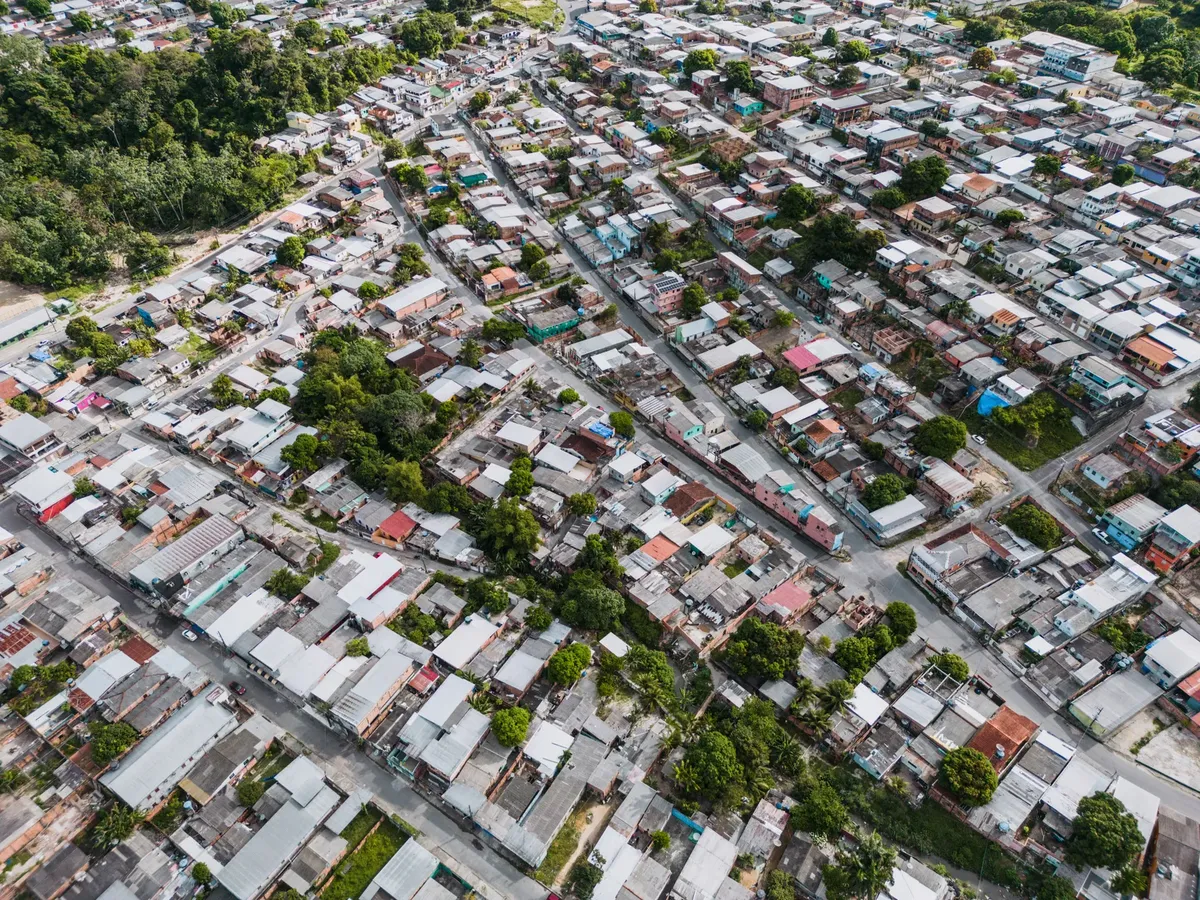
The results of these efforts are visible in the data. For the subsequent period from August 2023 to July 2024, the loss further decreased to 6,288 km², representing a 30.6% reduction and the lowest annual figure in nine years.
Provisional data for early 2024, including a 24% drop in cumulative deforestation from January to August relative to 2023, indicate continued downward trends.
| Period | Annual Deforestation (km²) |
|---|---|
| 2019 | 10,129 |
| 2023-2024 | 6,288 |
I observed how these recent declines to 6,288 km² in 2024 reflect intensified policing. This trend shows that active enforcement can successfully interrupt the cycle of rapid forest loss.
What are the steps to monitor forest health?
A scientist adjusts a high-resolution lens on a satellite ground station, capturing data transmitted from orbit. Monitoring the biome requires a structured approach to track both tree loss and the spread of fire.
- Collect satellite data to identify real-time changes in canopy cover and fire outbreaks. 2. Analyze land use patterns to distinguish between legal agriculture and illegal clearing. 3. Deploy field teams to frontier zones to enforce existing environmental regulations.
Perform a final check by comparing the collected field data against the satellite imagery to ensure accuracy. This multi-layered approach is necessary to manage the complex Amazon protection debate.
Is the impact limited to the Amazon?
A hiker walks through the dry, scrubby landscape of the Cerrado, feeling the heat of the sun on the open plains. While the Amazon receives the most attention, other biomes in Brazil are also undergoing significant changes.

The environmental impact is widespread. Similar declines occurred in other biomes, such as the Cerrado, which saw a 25.7% reduction in deforestation in 2024. However, the Cerrado surpassed Amazon losses for the first time in recent monitoring periods.
Additionally, the Pantanal saw a 77.2% reduction in early 2024 data, though fires unrelated to clearing rose 14% in 2024, exacerbating degradation.
A limitation of these successes is that underlying demand-side pressures from beef and soy exports continue to incentivize illegal clearing in frontier states like Pará and Mato Grosso.
The same subject is also called Government land use conflict.
This part also covers Local community response Amazon.
This part also covers International pressure on Brazil.
This part also covers Economic conflict sustainability.
Local community response Amazon
Related
FAQ
Does Brazil have high renewable energy use?
Are fires increasing in the Amazon?
Related posts
Brazil renewable energy cause: Why 14% global average
Forest policy guide: How to reform land use laws 90%

Brazil environmental policy outlook: How to balance growth




Comments 0