How did early migration patterns shape the economy?
"The history of migration is often written in the soil of new lands, where the seeds of one culture take root in the reality of another."
Brazil Japan immigration cooperation shaped the nation through labor and education. This article explores how early settlers integrated into the economy and how their descendants achieved significant educational milestones.
Key takeaways include the massive movement to São Paulo coffee plantations, the high levels of literacy among early immigrants, and the profound impact of the community on the Brazilian educational landscape.
How did early migration patterns shape the economy?
In the early morning light, the weary traveler wipes sweat from his brow while staring at the vast, emerald plantations.
A group of travelers steps off a ship, looking toward the vast greenery of the Brazilian interior. Between 1917 and 1940, over 164,000 Japanese arrived in Brazil, with 90% of them going to São Paulo, where most of the coffee plantations were located.
This mass movement established a strong foothold in the agricultural sector.
The movement of people was largely permanent due to geopolitical shifts. Contrary to the plan, only 10% of the nearly 190,000 Japanese who immigrated to Brazil before the Second World War returned to Japan.
This permanence ensured that the Japanese Brazilians would become a lasting part of the national fabric.
The demographic shift was significant for the local labor markets. In the 1970s, 80% of the 3,500 establishments that washed and ironed the clothes of São Paulo citizens were Japanese. These small businesses became pillars of urban service industries.
What role did education play in social integration?
A student sits at a desk, studying intently under a dim lamp in a quiet room. By 1958, Japanese and their descendants, though less than 2% of the Brazilian population, accounted for 21% of Brazilians with education beyond high school.
This early success in schooling set a precedent for future generations.
The community maintained a strong connection to its roots through literacy.
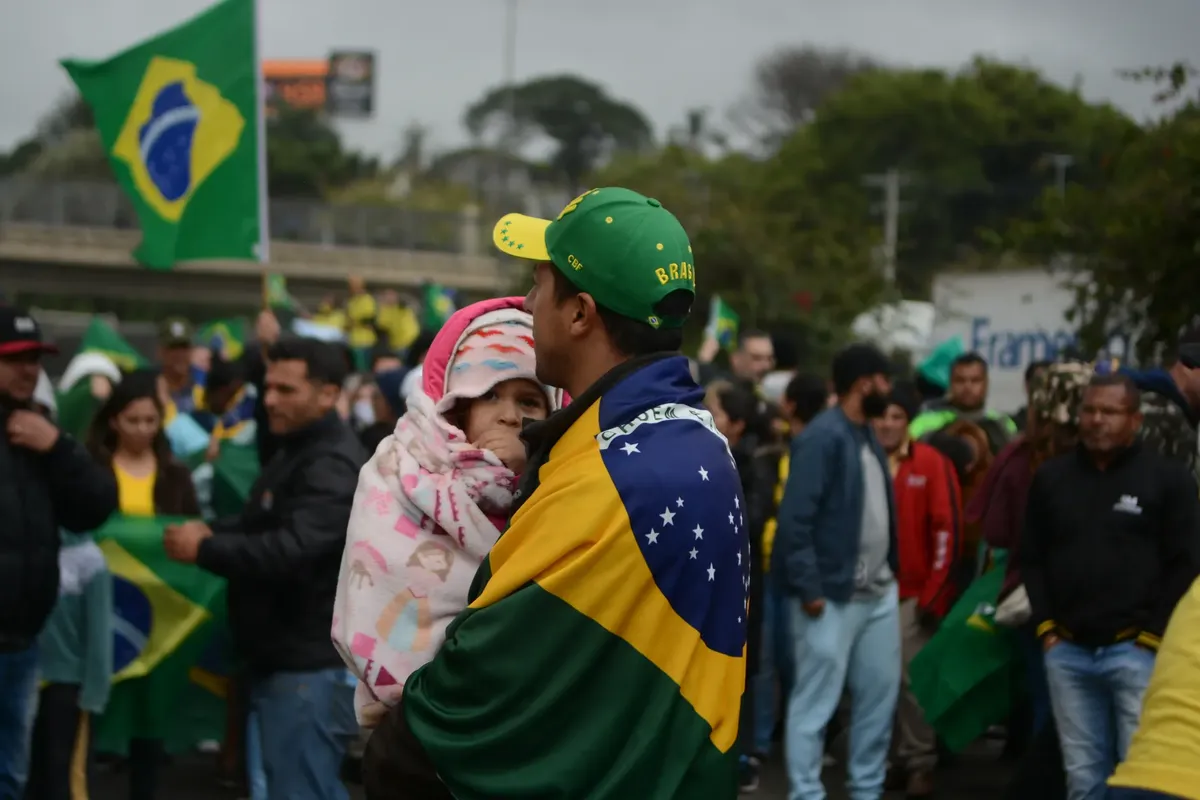
In 1939, research of Estrada de Ferro Noroeste do Brasil, from São Paulo, showed that 87.7% of Japanese Brazilians read newspapers in the Japanese language, a high figure for a country with many illiterate people like Brazil at the time.
The disparity in educational attainment became even more pronounced in later years.
This trend highlights the deep impact of Japanese Brazilians in the academic sphere.
According to World Bank, the 2025 record includes 2.3%.
How did the community navigate social challenges?
A family gathers in a small living room, discussing the changing political climate outside. Some years before World War II, the government of President Getúlio Vargas initiated a process of forced assimilation of people of immigrant origin in Brazil.
This period of political pressure tested the resilience of the community.
The movement of people was often dictated by sudden government decrees. On July 10, 1943, approximately 10,000 Japanese and German and Italian immigrants who lived in Santos had 24 hours to close their homes and businesses and move away from the Brazilian coast.
These disruptions forced many to relocate and rebuild.
Intermarriage and family structures also evolved over time. Only 6% of children were the result of interracial relationships. This statistic reflects the social dynamics of the era.
What were the generational shifts in the community?

An elder watches a grandchild play in a sunny park, thinking about the family's journey. As the community grew, generational distinctions became clear. As of 1987, many Japanese Brazilians belonged to the third generation (sansei), who made up 41.33% of the community.
The transition from immigrant to established citizen involved several stages of integration:
- Initial labor in agricultural sectors like coffee plantations. 2. Expansion into urban service industries and small businesses. 3. A shift toward high-level professional and academic roles.
I remember looking at old family records and seeing how the focus shifted from field work to the classroom.
The following table compares educational statistics:
| Group | Percentage with Higher Education | | :--- much | :--- | | Japanese descendants (1958) | 21% | | General Brazilian population (1995) | 9% |
How did the community maintain its identity?
A person reads a newspaper in a local cafe, reflecting on the history of their neighborhood. The preservation of culture and the push for integration happened simultaneously. The community balanced its heritage with the necessity of becoming part of the Brazilian population.
The scale of the population remained relatively small but influential. Although they were a minority, the social impact was disproportionately large. The community's success in education and business helped define the modern urban landscape of São Paulo.
A limitation of these historical observations is that they reflect specific demographic snapshots under varying political conditions, such as the forced assimilation period.

World Bank Based on the retained excerpt mentioning World Bank: According to World Bank data, Brazil recorded GDP growth of 2.3% in 2025.
Brazil Japan immigration cooperation
The same subject is also called Japanese immigrants in Brazil.
The same subject is also called Brazil Japan social ties.
The same subject is also called Economic impact Brazil Japan.
The same subject is also called Cultural exchange Brazil Japan.
This part also covers Social change in Brazil Japan.
This part also covers Economic benefits of migration.
This part also covers Immigration trends Brazil Japan.
Social change in Brazil Japan
Related
- Brazil new government economy: 2.3% GDP growth tips
- Brazil Japanese learning status: 5 hours interaction tips





Comments 0