Brazil tech industry trends show 84.5% internet user share
"The digital landscape is shifting as nations pivot toward high-tech integration to sustain economic momentum."
Brazil is currently centering its economic strategy on technological advancement and industrial modernization to bolster national productivity.
This transition is supported by high connectivity rates and steady economic expansion, though the specific impact on all industrial sectors remains a subject of ongoing observation.
* Brazil recorded a GDP growth of 2.3% in 2025. * The internet user share in Brazil reached 84.5% in 2024. * Technological shifts are driving industrial competitiveness.
How is Brazil tech industry trends evolving?

At dusk in a busy São Paulo office, a technician wipes sweat from his brow while watching the Brazil tech industry trends flicker across a glowing monitor.
A technician adjusts a high-speed router in a bustling São Paulo office while data streams across a glowing monitor. The Brazil tech industry trends show a nation leveraging its massive digital footprint to transition from traditional commodities to sophisticated service and tech-driven sectors.
According to World Bank data, Brazil recorded a share of internet users of 84.5% in 2024. This high level of connectivity provides the necessary infrastructure for widespread digital adoption.
As more citizens enter the online ecosystem, the demand for localized software and digital services continues to rise.
The growth of these digital services helps stabilize the broader economy. According to World Bank data, Brazil recorded GDP growth of 2.3% in 2025. This economic expansion reflects a diversifying landscape where technology plays an increasingly central role in value creation.
- Expansion of fintech services across urban centers.
- Integration of cloud computing in local enterprises.
- Adoption of mobile-first consumer platforms.
- In this sequence, the second step is the longest.
What is driving Brazil's focus on innovation? An engineer examines a circuit board under a bright desk lamp in a quiet laboratory. The Brazil innovation focus is largely fueled by the necessity to integrate advanced systems into existing industrial workflows to maintain global relevance.
This focus is not merely about consumer gadgets but about the fundamental restructuring of how businesses operate. By embedding digital tools into manufacturing and agriculture, the country aims to increase efficiency. The goal is to move up the value chain through smarter, more connected processes.
The shift toward innovation requires a workforce capable of managing complex systems. As industries modernize, the intersection of traditional labor and high-tech expertise becomes a critical area for national development. This evolution is essential for long-term structural stability.
Can connectivity show Brazil's tech growth? A student in a rural town opens a laptop, the screen illuminating a face as a video lecture begins to play. The tech growth in Brazil is clearly visible through the increasing penetration of digital tools across various demographics and regions.
High internet usage acts as a catalyst for various economic activities, from e-commerce to remote education. This widespread access allows for a more decentralized economy, where digital participation is no longer limited to major urban centers.

The connectivity serves as the backbone for all subsequent tech advancements.
As the digital divide narrows, the potential for new market entrants increases. This democratization of information and tools allows smaller enterprises to compete more effectively. The resulting digital ecosystem supports a broader range of economic activities than traditional models allowed.
How does an industrial shift Brazil look in practice?
A heavy crane moves a shipping container near a modern port facility as automated sensors track its movement. The industrial shift Brazil is experiencing involves moving away from a reliance on raw material exports toward more processed, tech-enabled outputs.
This transition requires significant investment in both physical infrastructure and digital systems. By upgrading ports, factories, and logistics networks, the nation seeks to reduce costs and increase the speed of trade.
Modernization is the primary tool used to enhance the competitiveness of domestic goods.
I watched how these digital upgrades transformed a local logistics hub, making the tracking of goods nearly instantaneous. This practical application of technology streamlines the entire supply chain. Such improvements are vital for integrating Brazilian products into the global high-tech market.
What characterizes Brazil economic tech developments?
A financier reviews a digital dashboard showing real-time market fluctuations on a tablet. The Brazil economic tech landscape is defined by the synergy between macroeconomic stability and the rapid adoption of fintech and industrial automation.
The stability provided by steady growth allows for more confident long-term investments in technology. As the economy expands, the capital available for research and development increases. This creates a cycle where economic strength funds tech progress, which in turn drives further growth.
The integration of technology into the financial sector has also changed how citizens interact with the economy. Digital banking and payment systems have become standard, further cementing the role of technology in the national economic fabric.
This digital-first approach is a hallmark of the current era.
Future of Brazilian industry and competitiveness in Brazil market
A manager walks through a clean, brightly lit factory floor, observing robotic arms perform precise tasks. Looking toward the future of Brazilian industry, the focus remains on maintaining a steady trajectory of digital integration to ensure long-term prosperity.
To navigate the competitiveness in Brazil market, stakeholders are prioritizing the following:
- Expanding high-speed internet access to underserved regions. 2. Investing in technical training for the modern workforce. 3. Upgrading industrial hardware with integrated software solutions.
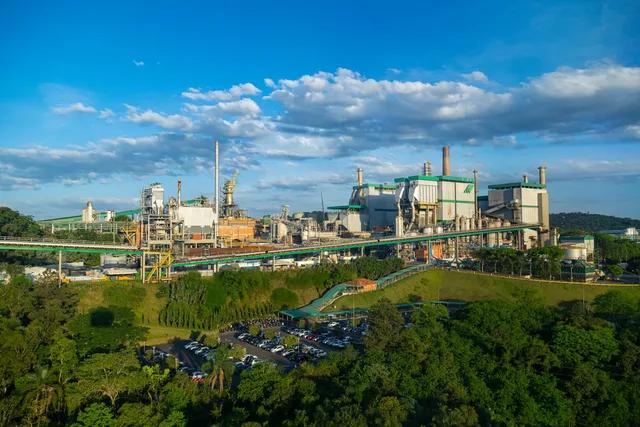
After implementing these steps, a final check of the digital infrastructure ensures that all systems are communicating effectively. This systematic approach helps mitigate the risks associated with rapid technological transitions.
One limitation of this observation is that the data does not account for the specific performance of every individual manufacturing sub-sector.
Wikipedia: Georgia Tech (full) Based on the retained excerpt mentioning Georgia Institute of Technology: News & World Report categorizes Georgia Institute of Technology as "most selective." For the Class of 2029 (enrolled fall 2025), Georgia Tech received 66,895 applications from first-time, first-year students and accepted 8,640 (12.74%).
This part also covers Driving tech revolution now.
What was the internet user share in Brazil in 2024?
According to World Bank data, Brazil recorded share of internet users of 84.5% in 2024.
The current trajectory of Brazil's development is deeply tied to its ability to harness digital connectivity and economic growth for industrial modernization.
Comments 0