Brazil labor news this week: Family farming tips guide
"The strength of a nation's economy is often measured by the stability of its labor market and the security of its food supply."
This report examines current Brazil labor news this week by analyzing shifting unemployment trends and the critical role of family farming in the national economy.
Readers will find a comparison of recent unemployment rates, an overview of the agricultural sector's contribution to GDP, and the specific impact of family farms on domestic food staples.

While these figures provide a snapshot of economic health, they do not account for regional disparities in labor access or localized food insecurity levels.
Key Takeaways: * Unemployment rates fluctuated between 6.0% in 2025 and 6.2% in 2026. * Family farms constitute 84.4% of all rural properties and contribute 10% to the GDP. * Domestic food staples like manioc and beans rely heavily on small-scale agricultural production.
What are the latest Brazil labor news this week?
A weary researcher rubs his eyes in a quiet office in Brasilia while reading the latest Brazil labor news this week on a glowing screen.
A researcher sits at a desk in Brasilia, scrolling through updated economic indicators on a glowing monitor. The data reveals a slight upward trend in the number of people seeking work across the country.
According to World Bank data, Brazil recorded an unemployment rate of 6.0% in 2025. However, this figure saw a minor increase in the following year. According to the International Monetary Fund (IMF), Brazil recorded an unemployment rate of 6.2% in 2026.
These shifts represent the core of Brazil labor issues currently being monitored by economists.
How do Brazil social problems intersect with agriculture?
A farmer walks through a dusty field in the interior, checking the ripeness of crops under a midday sun. The connection between land use and social stability is evident in how food is distributed.
Brazil labor rights and social welfare are deeply tied to the agricultural output of the nation. Examining Brazil social problems requires looking at how much food reaches the table versus how much is exported.

While the country maintains a massive export presence, the internal stability depends on domestic production. Understanding Brazil employment news requires looking at the people who drive these primary sectors.
According to World Bank, the 2025 record includes 6.0%.
How significant is the role of family farming?
In a rural kitchen at dawn, a woman feels the rough texture of beans as she fills a basket, reflecting on the vital importance of family farming in Brazil.
A heavy basket of beans is placed on a wooden table in a rural kitchen, smelling of earth and sun. The scale of small-scale farming is much larger than many urban residents realize.
Family farming is a cornerstone of the Brazilian economy, accounting for 10% of the country's GDP. These operations are widespread, as the Ministry of Agrarian Development (MDA) reported in 2009 that 84.4% of all rural properties are family farms.
They also provide 70% of the country's food consumption.
| Category | Family Farm Contribution |
|---|---|
| GDP Share | 10% |
| Food Consumption | 70% |
I compared these agricultural contributions to the broader export market to understand the domestic impact.
According to International Monetary Fund, the 2026 record includes 6.2%.
What is the impact of Brazil labor law updates on farmers?

A person signs a contract at a local cooperative, the pen scratching against the paper in a quiet room. Changes in policy can shift how smallholders manage their land and labor.
The agricultural landscape is shaped by how labor and land are managed. To understand Brazil labor law updates, one must look at how specific crops are supported. The following steps outline the importance of these sectors:
- Identify the primary staple crops produced by smallholders. 2. Assess the percentage of domestic food consumption covered by these farms. 3. Monitor the percentage of rural properties classified as family-run. 4. Verify the total contribution of these farms to the national GDP.
One limitation is that these figures do not reflect the specific volatility of seasonal labor availability.
How does grain production compare to domestic needs?
A large grain elevator hums in the background, processing massive quantities of seeds for international shipping. The scale of production is immense, yet the focus remains split between global markets and local plates.
The country maintains a massive presence in the global market, but domestic staples are handled differently. In 2024, Brazil was the second-biggest grain exporter in the world, with a 19% international market share, and the fourth overall grain producer.
Despite this, family farmers produce 21.4% of food consumed domestically.
What challenges does food security face?
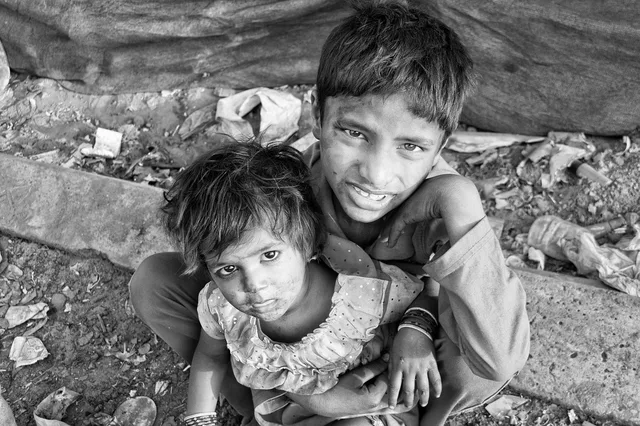
A mother prepares a meal for her children, looking carefully at the portions available in the pantry. The gap between production and consumption is a vital metric for social stability.
Food security remains a complex issue despite high production numbers. In 2023, approximately 27.6% of Brazilian households, equating to 21.6 million homes, experienced some level of food insecurity.
Family farms are critical to mitigating this, as they provide 84% of manioc, 67% of beans, and 49% of corn.
- What are the latest Brazil labor news this week?
- How do Brazil social problems intersect with agriculture?
- How significant is the role of family farming?
This part also covers Brazil social inequality.
This part also covers Brazil employment policy.
How much of the domestic food consumption is provided by family farms?
Family farming accounts for 70% of the country's food consumption.
The intersection of labor trends and agricultural productivity defines the current economic landscape in Brazil. While unemployment shows slight fluctuations, the massive scale of family farming remains the primary driver for domestic food staples and a significant contributor to the national GDP.
How do unemployment fluctuations affect the nation?
Unemployment rates in Brazil shifted from 6.0% in 2025 to 6.2% in 2026. This comparison shows a minor upward trend in the number of people seeking work. Such changes in the labor market influence the overall strength of the economy by altering the stability of employment levels.
Can family farming sustain domestic food security?
Family farms provide 70% of the country's food consumption, which is a critical condition for domestic stability. They produce 84% of manioc, 67% of beans, and 49% of corn. This high level of production for staples helps mitigate the food insecurity experienced by 27.6% of Brazilian households.
Comparing the 10% GDP contribution of family farms to their role in providing domestic staples highlights their economic importance. While the country is a major grain exporter, the reliance on small-scale production for beans and manioc remains a key factor for local food access.
Comments 0